
Pool Decks
Slip-resistant concrete pool decks built for DC's intense summer heat and freeze-thaw winters. Drainage, expansion joints, and pool-chemistry-resistant sealers standard.
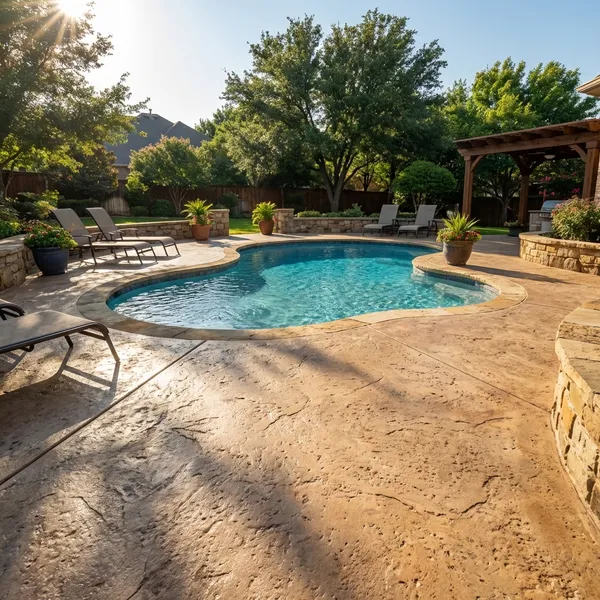
Concrete Pool Decks Built for DC's Dual Climate Challenge
At DC Superior Concrete , we install concrete pool decks for residential properties throughout Washington, DC, suburban Maryland, and Northern Virginia — engineered for the unique dual demands of DC's hot, humid summers and cold, freeze-thaw winters.
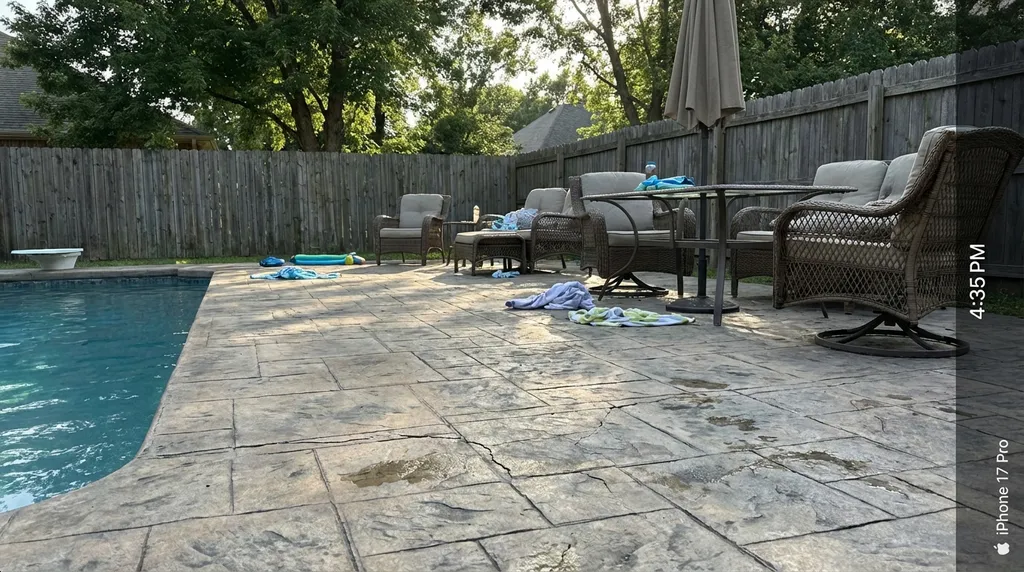
A DC pool deck faces punishment from two directions. In summer, it sits in full sun heat and constant pool water splash — chlorinated water that degrades untreated concrete surfaces over time. Come winter, the same deck endures freeze-thaw cycling with water sitting in surface imperfections. Most pool deck failures in the DMV trace back to inadequate expansion joints and the wrong sealer for this dual-season exposure.
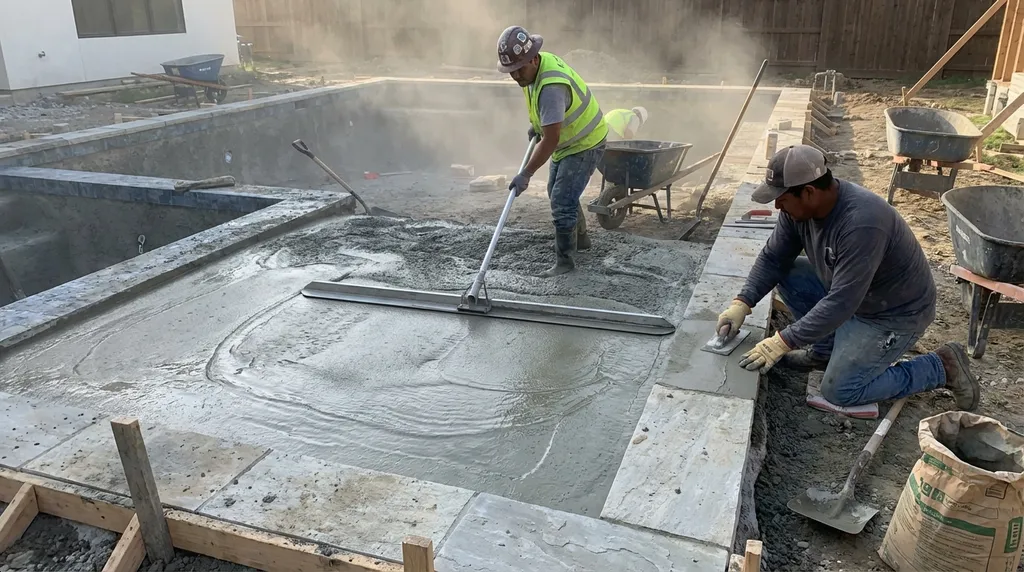
We install expansion joints between the pool coping and deck slab and at regular intervals throughout the deck surface. These joints accommodate the differential movement between the pool shell and the surrounding concrete — preventing the edge cracking that's common on DC pool decks that weren't properly isolated from the pool structure.
DC Pool Decks Face Year-Round Stress
Summer Heat and UV
DC summers regularly reach 95°F+ with high humidity. Bare concrete absorbs and radiates heat — surface temperatures can exceed 140°F. We offer light-colored finishes and cool-deck texture coatings that reflect solar radiation and reduce surface temperature by 25–30°F for comfortable barefoot use.
Pool Chemistry Attack
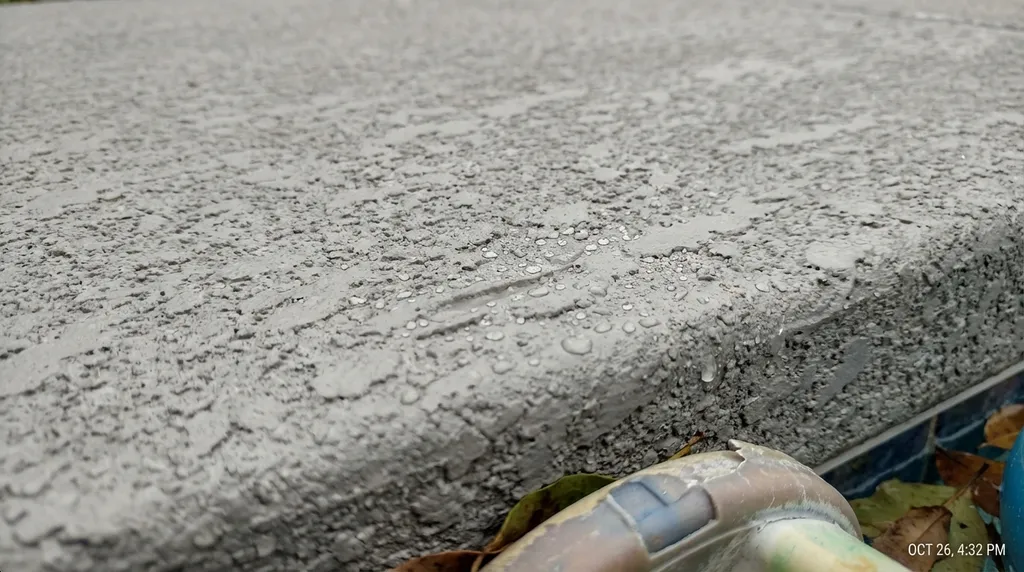
Chlorinated pool water splashing on an unsealed deck gradually attacks the cement paste surface. Salt-water pools generate lower chlorine concentrations but can still degrade concrete over time. We seal every pool deck with a product rated for pool chemical exposure and UV — not the same sealer used on inland driveways.
Freeze-Thaw off-Season
When the DC pool season ends in September, the deck sits through 20+ freeze-thaw cycles. Water in surface micro-cracks from pool splash season is now expanding and contracting with each freeze. Proper sealing before winter and the right expansion joint placement are what keep pool decks from cracking at the pool-deck boundary.
What Every Pool Deck Installation Includes
Pool Deck FAQ
What's the best pool deck surface for DC's climate?
Exposed aggregate is our top recommendation for DC pool decks — it provides inherent slip resistance from the stone texture, doesn't require the same frequency of resealing as stamped concrete, and drains well. Broom finish is a solid budget option. Stamped concrete looks great but requires annual sealing maintenance to hold up under pool chemistry exposure.
How do I prevent my pool deck from cracking at the edge of the pool?
The pool shell and the concrete deck move independently — the pool shell floats on the soil while the deck slab rests on it. Without an expansion joint at the coping-to-deck boundary, differential movement cracks the deck. We install a full perimeter expansion joint filled with a flexible backer and polyurethane caulk rated for pool environments.
Can I resurface an existing pool deck that's cracking?
Yes, if the existing slab is structurally sound and not displaced. We prep the surface with shot blasting or grinding and apply a polymer-modified overlay system. Pool deck overlays in DC need to be breathable — vapor trapped under an impermeable overlay bubbles and delaminates in summer heat.
How do I keep a concrete pool deck cool enough to walk on barefoot?
Light colors reflect heat significantly more than dark colors. Cool-deck texture coating products are specifically formulated to reflect solar radiation and insulate slightly. Exposed aggregate with a light-colored stone aggregate also performs better thermally than a dark gray smooth slab.
How often does a DC pool deck need to be sealed?
Stamped and colored pool decks need resealing every 1–2 years due to pool chemical and UV degradation of the sealer film. Plain broom or exposed aggregate decks sealed with a penetrating silane-siloxane sealer last 3–5 years between applications. We recommend fall sealing before freeze-thaw season every year for maximum protection.
Build the Pool Deck
DC Summers Demand
Free estimates for concrete pool decks throughout Washington, DC, suburban Maryland, and Northern Virginia.