
Concrete Stairs & Steps
Custom concrete stairs for Capitol Hill rowhouses, front stoops, and side entries. Frost footings, broom-finished treads, and code-compliant dimensions built to last DC winters.
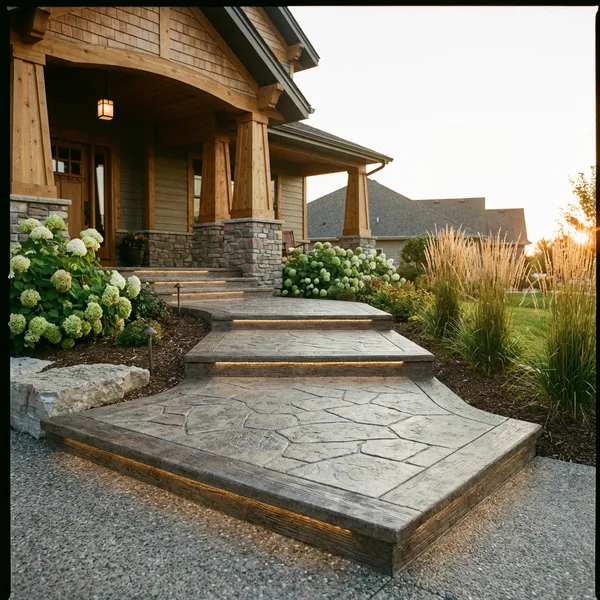
Concrete Stairs Built for DC's Historic Rowhouses
At DC Superior Concrete , we build custom concrete stairs and front steps for residential and commercial properties throughout Washington, DC — from the steep stoops of Capitol Hill to grade-change stairs in Alexandria and the level-transition steps across Bethesda.
DC's rowhouse stock — much of it 80 to 140 years old — has front steps that were built without modern footings or reinforcement. These steps settle, crack at the connection to the porch, and become safety hazards when road salt attacks the surface each winter. Replacing them isn't just cosmetic — it's a liability issue for any property owner.
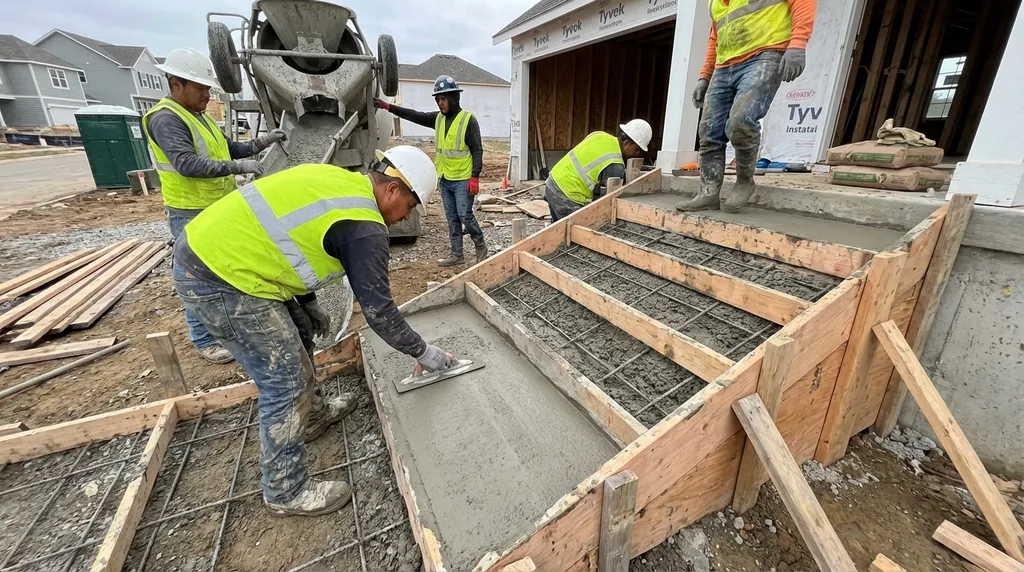
Every concrete staircase we build gets footings that extend below DC's 30-inch frost depth. Without this, frost heave lifts the entire stair structure away from the building seasonally — the telltale gap and crack at the top riser that you see on unrestored rowhouses all over the city. We also build expansion joint separation between the stair structure and the building foundation so they can move independently.
Why DC Steps Fail and How We Build Them Differently
Frost Heave at the Top Riser
Steps with shallow or no footings ride the frost each winter — separating from the building at the top riser and settling back imperfectly each spring. After a few cycles, the gap becomes structural and the top step becomes a trip hazard. Footings below frost depth eliminate this movement entirely.
Rock Salt Attack on Treads
Front steps are ground zero for ice management. Residents apply rock salt or sodium chloride directly to the treads — the most concentrated salt exposure any concrete surface sees. We use air-entrained 3,500+ PSI mixes and strongly advise against sodium chloride deicers in favor of calcium chloride or sand for traction.
Historic District Aesthetics
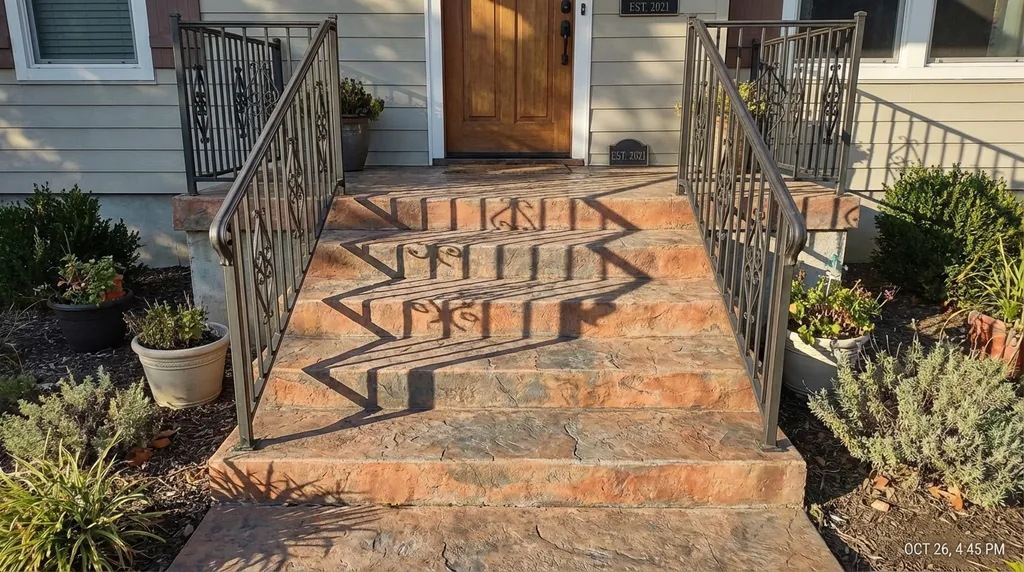
Capitol Hill, Georgetown, and Dupont Circle have design standards that affect exterior modifications including front steps. We build to DC building code riser and tread dimensions, and can finish steps with brick-pattern stamps, smooth trowel, or broom texture to match the existing streetscape character.
What Every Stair Installation Includes
Concrete Stairs FAQ
Do I need a permit to replace front steps in DC?
Yes in most cases. DC requires a building permit for stair replacement, particularly for steps exceeding 30 inches in height, attached to a building, or in a historic district. We submit the permit application and build to the stamped drawings. Don't let an unlicensed contractor skip this — unpermitted work in DC can result in stop-work orders and forced demolition.
My front steps are cracking at the wall — can they be repaired?
The crack between steps and the building wall is typically a frost heave joint gap or an inadequately isolated expansion joint that has opened. If the steps themselves are structurally sound and the footing is solid, we can fill the joint with a flexible polyurethane sealant. If the footing is failing, replacement with proper frost-depth footings is the correct fix.
What riser height is correct for DC residential stairs?
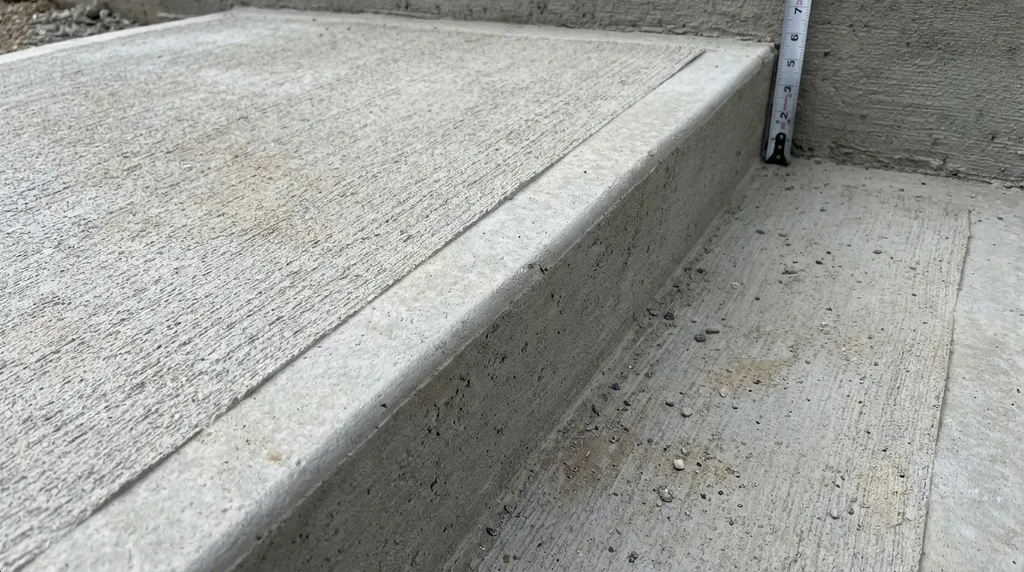
DC building code requires risers between 4 and 7 inches for residential stairs, with all risers in a stair run consistent within 3/8 inch. Most DC rowhouse front steps run 6–7 inch risers. Inconsistent risers are a trip hazard and a code violation — we build to consistent dimensions throughout.
Can concrete steps be made to look like brick to match my rowhouse?
Yes. Running bond brick stamp on the riser faces and treads is a popular finish for Capitol Hill and Logan Circle rowhouses. We apply a color hardener and stamp before the concrete sets, then seal the finished surface. The result complements brick homes without the maintenance of actual brick-and-mortar steps.
How do I prevent my front steps from getting destroyed by road salt?
Switch to calcium chloride or magnesium chloride for ice management — they're less damaging than sodium chloride (rock salt) at typical application rates. Sand provides traction without chemical attack. Seal the steps annually with a penetrating silane-siloxane sealer to reduce chloride ion penetration. These three practices extend step life significantly.
Replace Those Steps
Before Winter Returns
Free estimates for concrete stair and step installation across Washington, DC. Capitol Hill, Georgetown, Columbia Heights, and beyond.