
Patios & Walkways
Concrete patios and walkways designed for DC's outdoor living season — tight Georgetown backyards, wide Bethesda terraces, and everything in between.
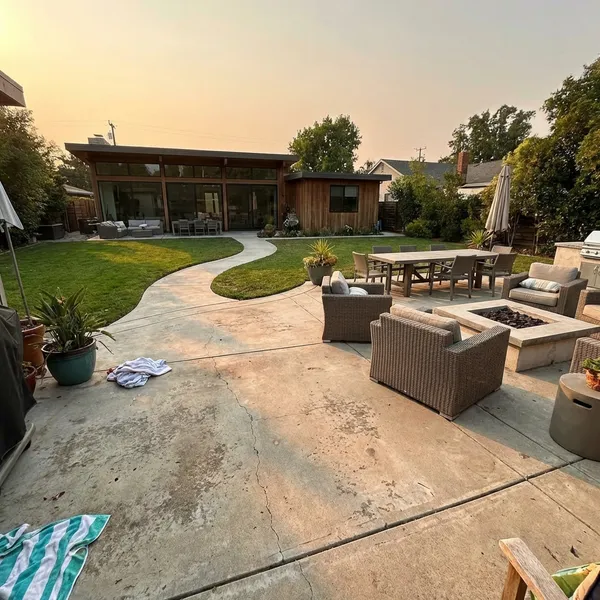
Concrete Patios and Walkways Built for the DMV
At DC Superior Concrete , we design and install concrete patios and walkways for residential and commercial properties throughout Washington, DC, Northern Virginia, and suburban Maryland.
The typical Georgetown rowhouse backyard is forty feet deep with no side access — a constrained space where every inch of the pour has to be planned before the truck shows up. We've worked in these tight DC footprints and know how to form, pour, and finish concrete in conditions that stop less experienced crews.
Drainage is the critical detail most homeowners overlook. A patio without the right slope sheds water against the foundation — a serious problem on DC's clay subsoil where standing water at the foundation line means saturated soil and potential settling. We grade every slab away from structures, minimum 1% slope.
DC Outdoor Spaces Have Unique Demands
Tight Urban Access
Many DC rowhouses have side gates under 36 inches wide with no alley access. We pour these projects with smaller loads, pump trucks when needed, and crews experienced in carrying and forming concrete in confined urban spaces.
Foundation Drainage
DC's clay soils don't drain well. A flat or inward-sloping patio creates a moat around your foundation. We grade every patio to shed water away from the house and can add French drain channels at patio edges where site conditions demand it.
Tree Root Conflicts
DC's mature tree canopy is one of its best features and one of the biggest challenges for walkways. We design control joint locations to accommodate predictable root movement and can use thickened edges adjacent to large trees rather than fighting root growth.
What Every Patio Installation Includes
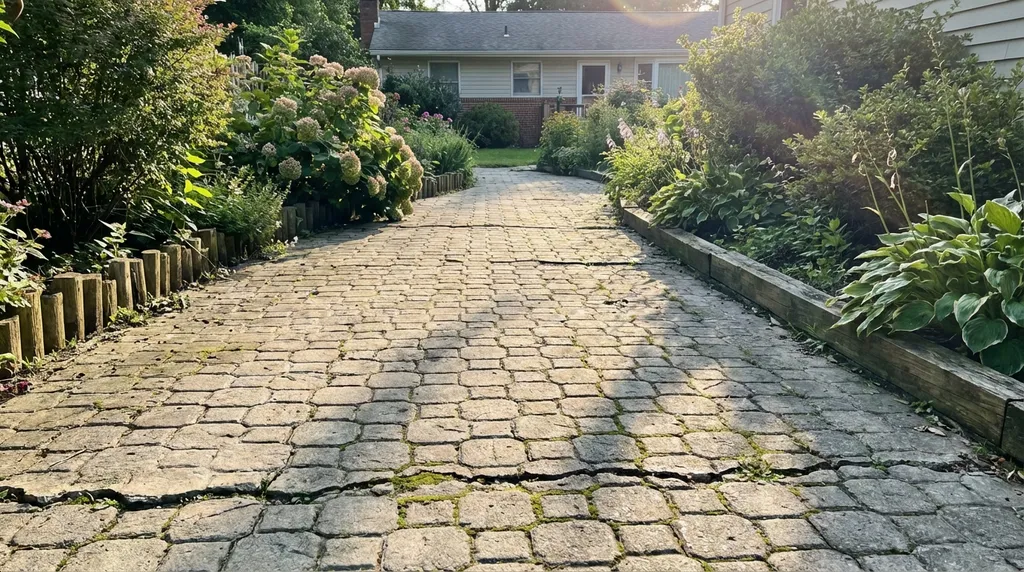
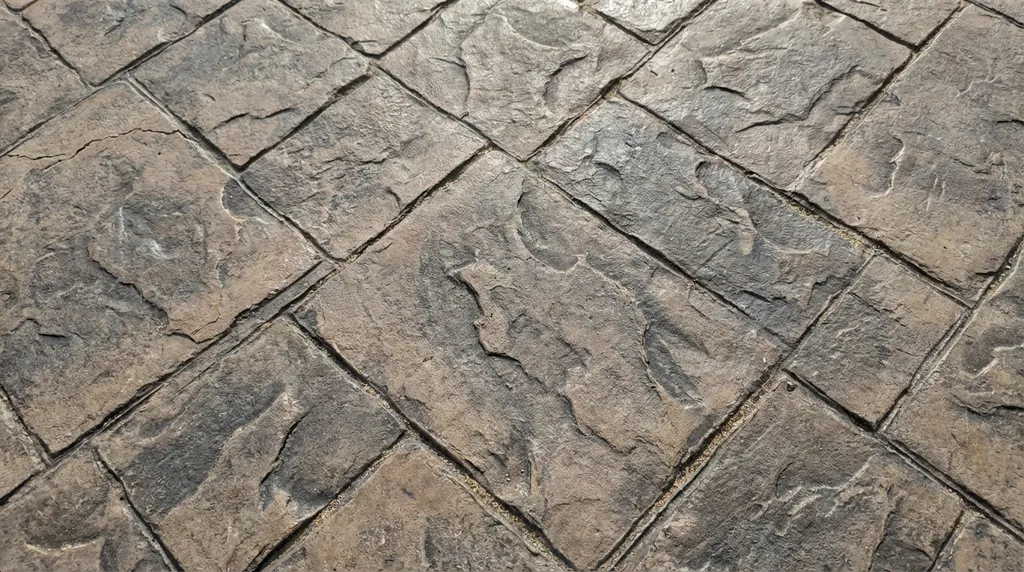
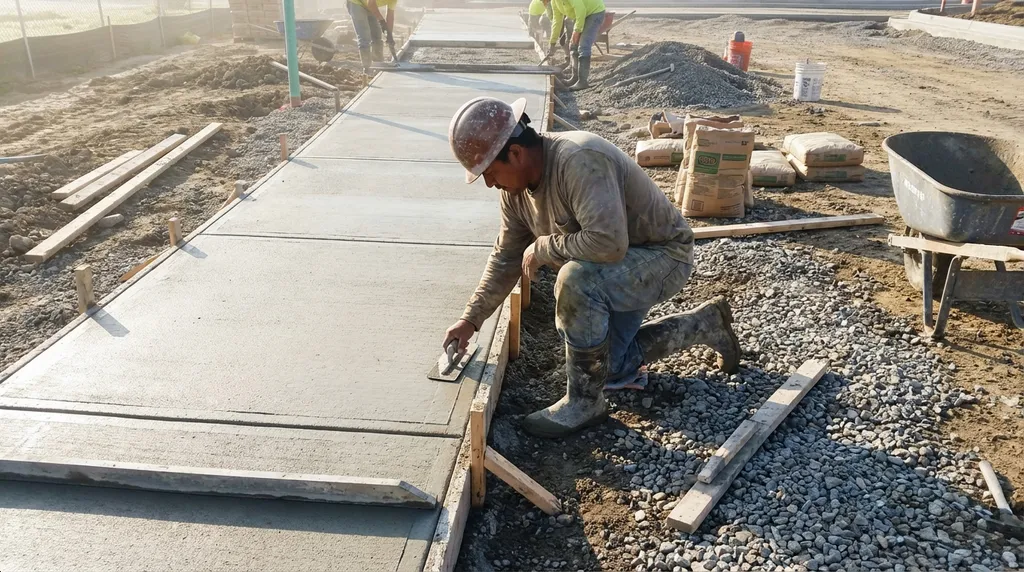
Patios & Walkways FAQ
Do I need a permit for a concrete patio in DC?
In most cases, a ground-level patio in DC does not require a building permit. However, if the patio connects to a structure, exceeds a certain size, or is in a historic district, DCRA may require review. We advise on permit requirements before every project.
How wide should a concrete walkway be?
Residential walkways are typically 3–4 feet wide. Front walk to a main entrance should be at least 4 feet for comfortable two-person use. Side paths between rowhouses are often constrained to 24–30 inches. ADA requires 36-inch minimum for accessible routes.
Can concrete patios be poured in sections over multiple days?
We prefer to pour a patio monolithically in one pour when possible. If a patio is very large, we may pour in planned sections with a proper construction joint between them. We never pour a partial slab and leave it open overnight in unfavorable weather conditions.
What's the best finish for a DC patio that gets afternoon shade?
Shaded patios in DC can stay moist longer and may develop algae on slippery smooth finishes. Broom finish and exposed aggregate provide traction even when wet. If you prefer a decorative look, stamped with a matte sealer is a good balance of appearance and slip resistance.
My existing patio is cracked and uneven — is concrete overlay an option?
Concrete overlays work on sound slabs with surface-only degradation. If the underlying slab has structural cracks, settled sections, or subbase failure, an overlay will reflect those problems through within a few seasons. We inspect first and give you an honest assessment of whether overlay or replacement is the right call.
Build the Outdoor Space
You've Been Planning
Free estimates for concrete patios and walkways throughout Washington, DC, Northern Virginia, and suburban Maryland.