
Concrete Repair & Restoration
DC winters and clay soils crack, spall, and heave concrete. We diagnose the actual cause and fix it right — not just patch the surface.
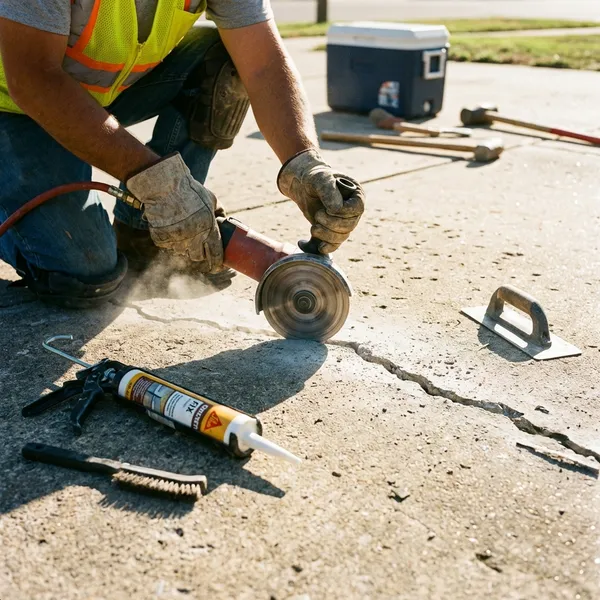
Concrete Repair That Addresses the Root Cause
At DC Superior Concrete , we repair and restore damaged concrete throughout Washington, DC — driveways, patios, sidewalks, garage floors, and foundation surfaces — diagnosing the actual cause of failure before recommending a fix.
DC's climate and geology are hard on concrete. Deicing salt from DDOT spreaders penetrates surface pores and attacks the cement paste below. Freeze-thaw cycles push moisture into micro-cracks, expanding them with each winter. Piedmont clay heaves slabs from beneath when soil moisture changes. Each of these failure modes looks similar on the surface but demands a different repair approach.
Patching surface spalling without addressing the subbase is wasted money. We assess every project honestly: if the damage is surface-only on a structurally sound slab, we repair it. If the slab has moved, settled, or has subbase failure, we tell you that before you spend money on a patch that won't hold.
The Three Forces Destroying DC Concrete
Deicing Salt Attack
DC spreads thousands of tons of road salt every winter. Salt lowers the freezing point of surface water, causing more freeze-thaw cycles at the surface, and chloride ions penetrate concrete to attack rebar and cement paste. Spalling, pitting, and scaling are the visible results. Only proper mix design and sealing prevent it.
Clay Soil Heaving
DC's expansive clay expands when wet and contracts when dry — sometimes by 2–3 inches. Slabs with no subbase separation from this clay move with it, resulting in raised panel edges, vertical cracks, and trip hazards that worsen each year without intervention.
Freeze-Thaw Cycling
DC averages 20+ freeze-thaw cycles in a typical winter. Water sitting in hairline cracks expands 9% when it freezes — widening those cracks incrementally each cycle. Cracks that start at 1/16 inch become structural problems within 3–5 winters without repair.
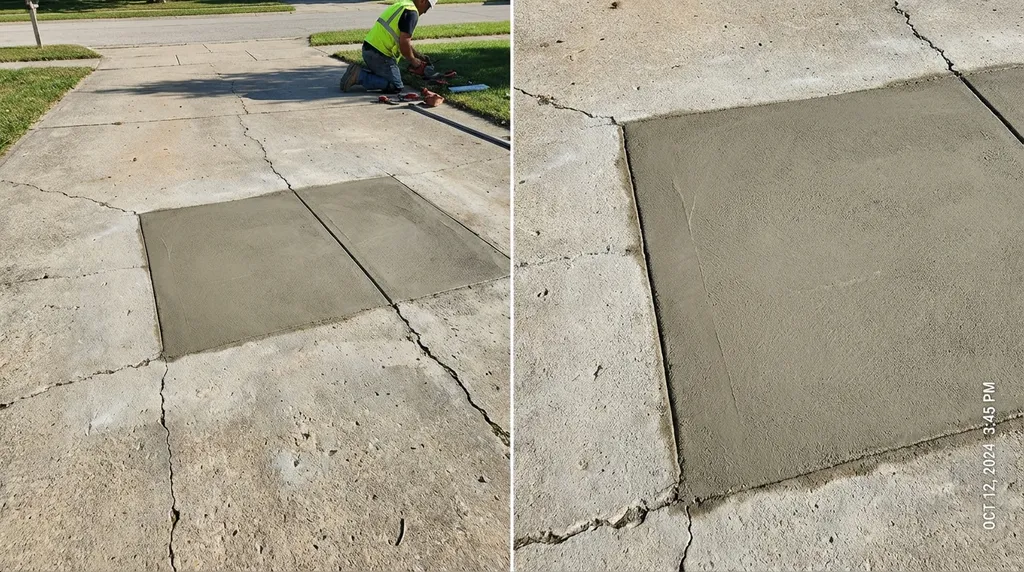
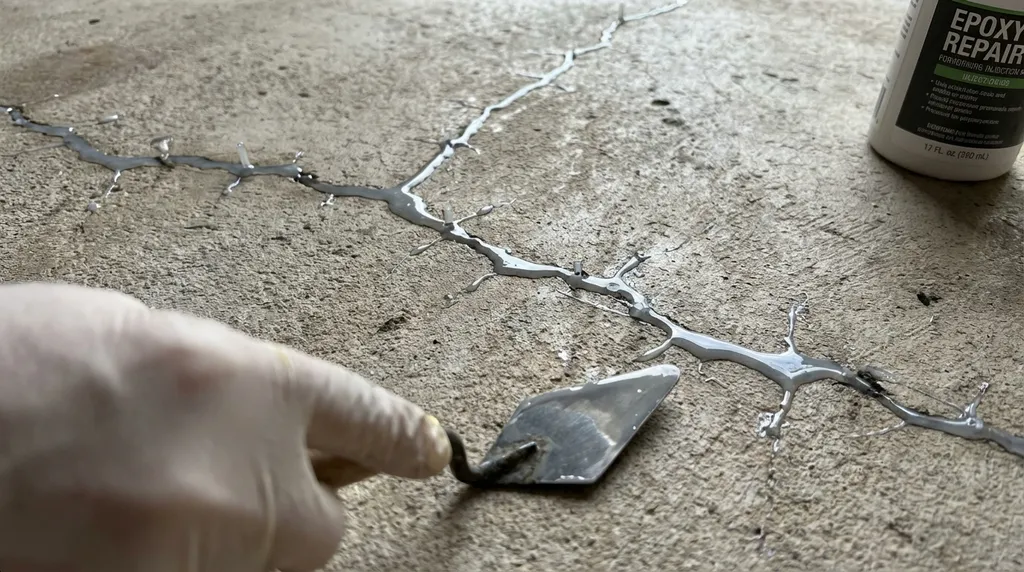
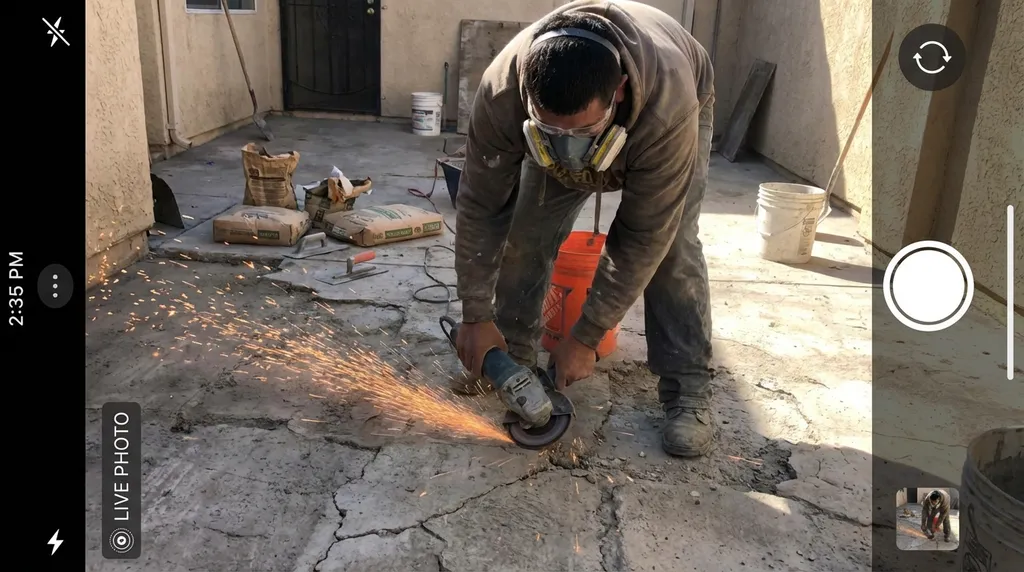
Concrete Repair Services We Provide
Concrete Repair FAQ
How do I know if my concrete should be repaired or replaced?
Key indicators for replacement: vertical displacement between panels (trip hazards), widespread subbase failure causing multiple settled areas, structural cracks with active water passage, or delamination affecting more than 30% of the surface. Surface-only spalling, hairline cracks, and joint seal failure are typically repairable.
Can a concrete overlay fix my spalled driveway?
Yes, when applied over a structurally sound slab with surface-only deterioration. The overlay bonds to the prepared substrate and provides a fresh surface. In DC's climate, we use polymer-modified overlay systems that flex slightly with freeze-thaw movement rather than rigid materials that delaminate.
What's the best way to prevent concrete from spalling after repair?
Seal it. A penetrating silane-siloxane sealer applied after repair, and reapplied every 2–3 years, is the most effective barrier against the road salt and freeze-thaw cycles that cause DC concrete to spall. Stop using sodium chloride deicers and switch to calcium chloride or sand.
My sidewalk panel has heaved and creates a trip hazard — what are my options?
For trip hazards on DC public sidewalks, DDOT may cite property owners for liability. Options include slab grinding (chamfering the raised edge), mudjacking to lift the lower panel, or full panel replacement. The right choice depends on the cause — if tree roots pushed the panel, grinding buys time but the root will keep growing.
Do concrete cracks always mean structural problems?
No. Shrinkage cracks from initial curing are cosmetic and common. Random pattern (map) cracking indicates past freeze-thaw damage to the surface layer. Structural problems appear as cracks with vertical or horizontal displacement, cracks that span the full slab width, or cracks that open and close seasonally.
Get an Honest Assessment
Before You Spend a Dollar
Free on-site concrete repair assessment throughout Washington, DC and the DMV. We diagnose first, quote second.