
Barn & Equipment Pads
Heavy-duty concrete pads for agricultural and utility use in the DC exurbs of Maryland and Virginia. Built for equipment loads, livestock traffic, and outdoor exposure.
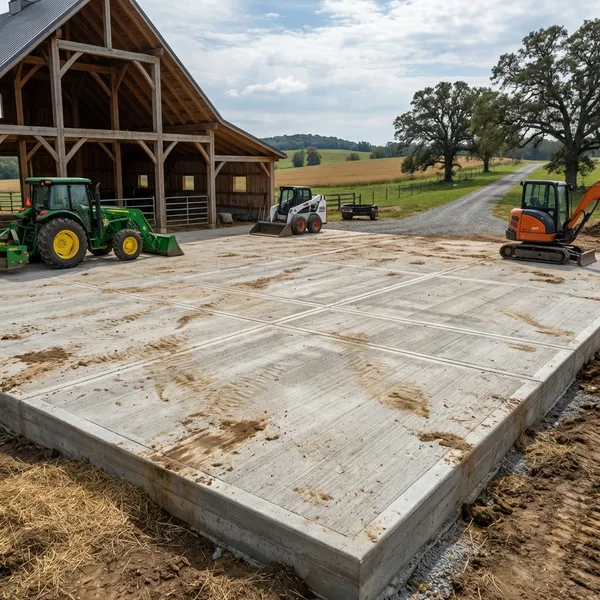
Concrete Pads Built for Agricultural Demands
At DC Superior Concrete , we pour barn floors, equipment storage pads, and utility slabs for agricultural and rural properties in the outer DC metro area — including Loudoun County, Montgomery County, Prince George's County, and Frederick County.
Rural properties in DC's exurbs deal with a different set of concrete demands than urban residential work. Equipment pads need to handle tractors, skid steers, hay bales, and livestock without deflecting. Barn floors need drainage designed for cleaning and manure management. Utility pads near feedlots need chemical-resistant finishes that stand up to ammonia and acidic waste.
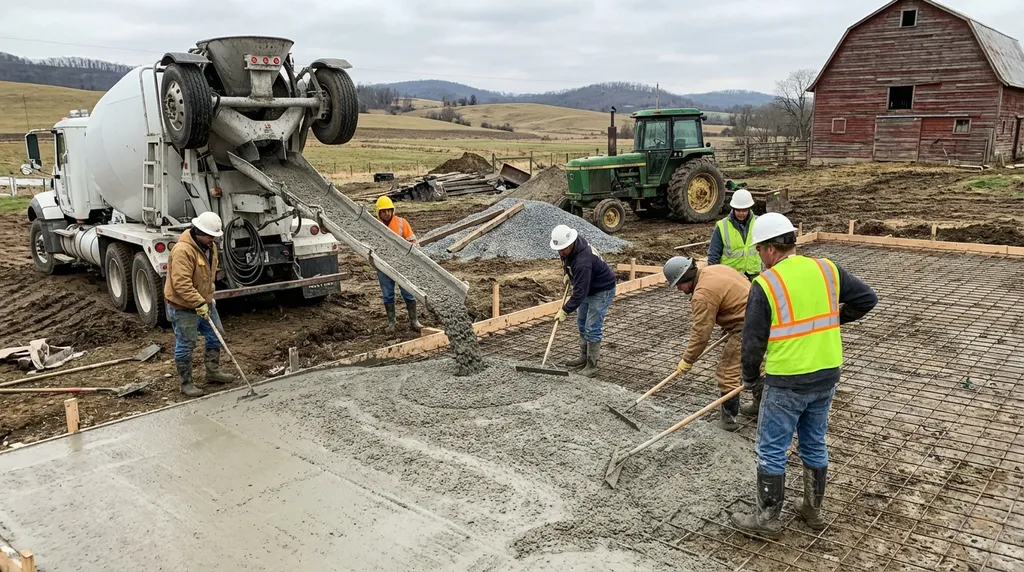
The underlying soil in much of rural Maryland and Northern Virginia is similar to DC's Piedmont clay — expansive and moisture-sensitive. We excavate to depth, compact a stone base to carry the load, and pour 5–6 inch slabs with heavy rebar grids sized to the actual equipment being stored. Agricultural concrete isn't the place for lightweight mix designs.
Agricultural Concrete in the DC Exurbs
Heavy Equipment Loads
A loaded hay wagon or tractor with a full implement can exceed 20 tons on a small footprint. Standard residential slab specs won't hold this weight on soft clay subsoil. We engineer pad thickness, rebar, and subbase to the actual equipment weights — not a generic agricultural spec.
Drainage for Barn Floors
Barn floors need a cross-slope toward a central drain or trench drain to manage hosing, rainwater intrusion, and animal waste. We design slope and drain integration before pouring — getting the drainage right is far easier during the pour than retrofitting later.
Chemical Resistance
Livestock waste, fertilizers, and fuel are chemically aggressive to standard concrete. We apply densifier and penetrating sealer to agricultural pads that will see these exposures — or use a concrete mix with higher cement content and lower water-cement ratio for improved chemical resistance from the mix itself.
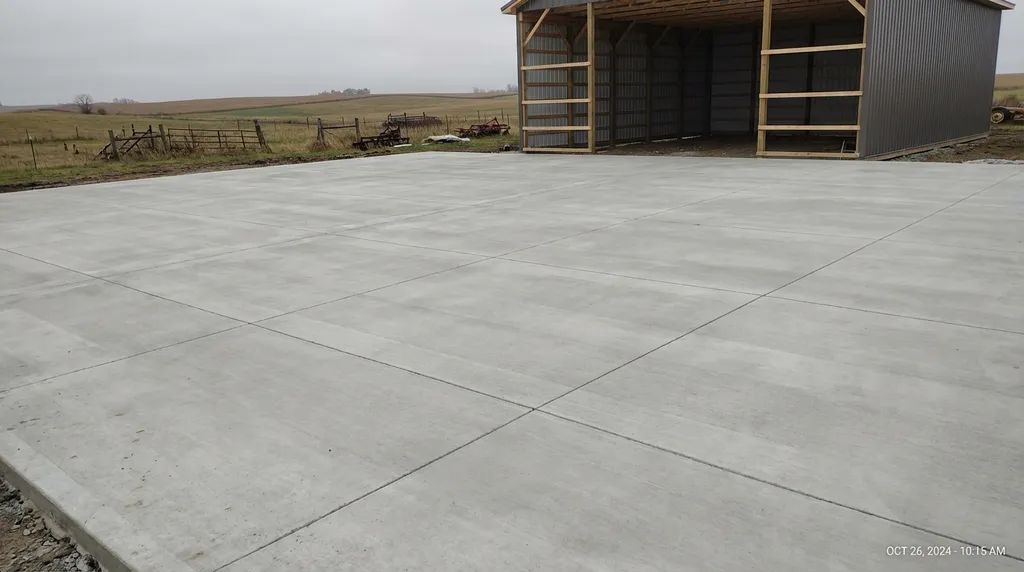
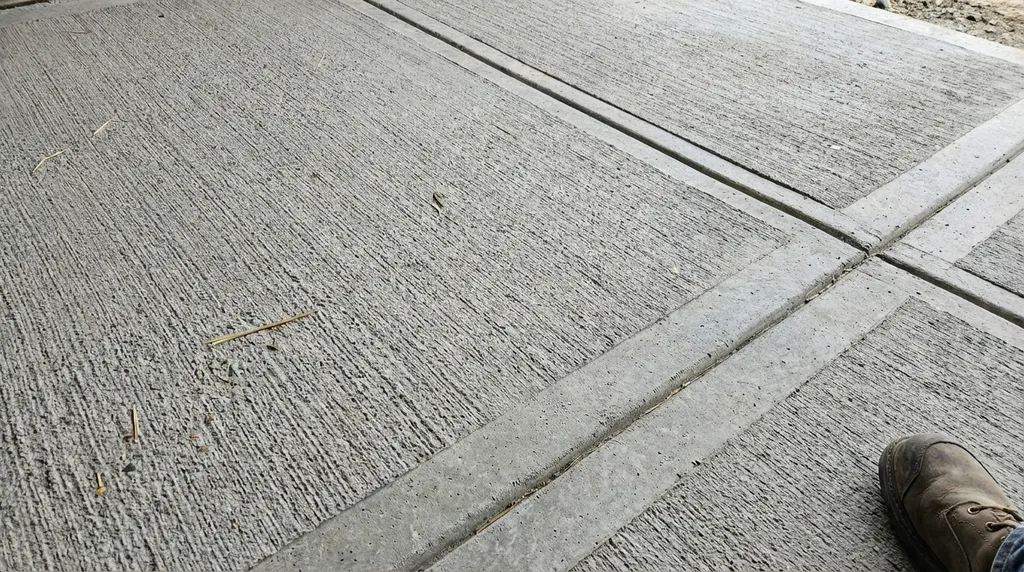
What Every Barn and Equipment Pad Installation Includes
Barn & Equipment Pad FAQ
How thick does a concrete pad need to be for a tractor?
A standard farm tractor on a well-prepared subbase can be accommodated with a 5-inch slab and a #4 rebar grid at 12 inches on center. Larger equipment — combines, heavy loaders, tandem-axle trucks — warrants 6 inches with heavier reinforcement. We size to your specific equipment.
Do I need a permit for a barn floor or equipment pad in rural Maryland or Virginia?
Permit requirements vary by county and structure type. Rural counties in the DC metro area generally have less stringent requirements for agricultural structures than urban DC or suburban jurisdictions. We advise on permit requirements based on your specific county before starting work.
Can you pour a concrete pad in a muddy or wet field?
The subgrade must be stable and able to support the concrete weight before pouring. In very wet conditions, we may need to allow drying time, import additional stone base material, or use geotextile fabric to stabilize the subgrade. Pouring over unstable wet ground produces a slab that cracks and settles immediately.
What's the best slope for a barn floor drain?
Barn floors typically slope 1–2% toward a central gutter or trench drain. Too little slope doesn't drain; too much creates footing and traction problems for livestock. We design the drainage layout before pouring and verify the slope with a level during the pour.
Can concrete handle horse hooves without cracking?
Yes, but bare concrete is not ideal for horse stall flooring due to hardness and slipperiness. Typically, concrete provides the structural base and drainage benefit, then rubber mat systems are installed over the concrete within stalls for animal comfort and traction. We install the concrete layer; the mats are a separate product.
Spec Your Agricultural
Concrete Right
Free estimates for barn floors and equipment pads in Loudoun, Montgomery, Frederick, Prince George's, and surrounding counties.