
Colored & Stained Concrete
Integral color, acid staining, and water-based stain systems for DC concrete surfaces. UV-stable colorants and sealed finishes built for Mid-Atlantic sun and rain.
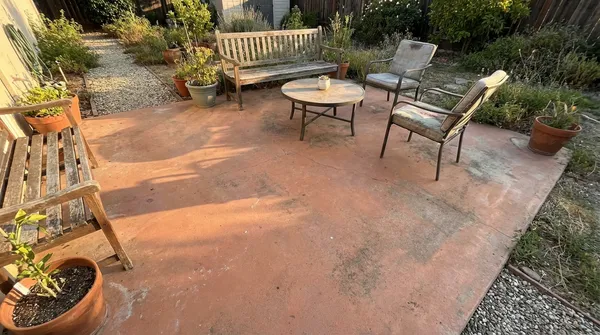
Colored and Stained Concrete That Holds Up in DC
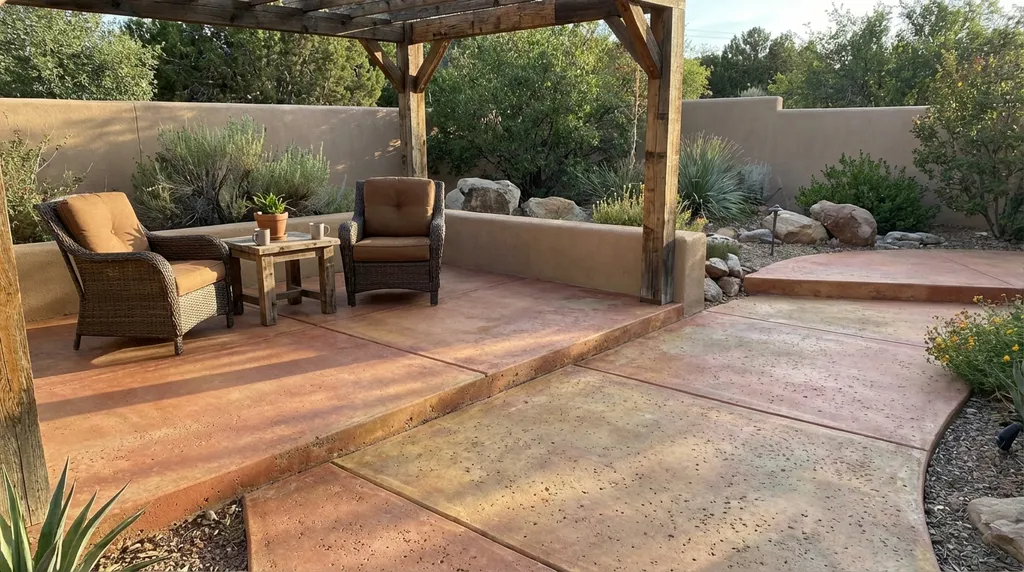
At DC Superior Concrete , we install colored and stained concrete for driveways, patios, walkways, and interior floors throughout Washington, DC and the DMV — with color systems and sealers selected specifically for the Mid-Atlantic climate.
Coloring concrete in DC's climate is more demanding than indoor or warm-climate applications. DC outdoor concrete faces UV exposure from summer sun, freeze-thaw cycling through winter, and the chemical attack of deicing salt on the sealer topcoat. Color options that look rich in a showroom brochure can fade to washed-out gray within two seasons if the wrong sealer system is chosen.
We use UV-stable colorants — either integral color blended at the batch plant or surface-hardener color applied during the pour — combined with a UV-resistant sealer topcoat. For existing concrete surfaces, acid staining penetrates the existing slab and creates mottled, translucent earth tones that are inherently UV-stable because the color is a chemical reaction within the concrete, not a film coating on top of it.
Color Systems That Survive DC's Four Seasons
UV Fading in DC Summers
DC sits at 38° latitude with hot, direct summer sun. Acrylic sealer topcoats without UV inhibitors yellow and chalk within 1–2 seasons in DC's outdoor exposure. We use polyurethane and polyaspartic topcoats with UV package additives that maintain color depth through multiple Mid-Atlantic summers without yellowing.
Acid Staining Existing Slabs
DC homeowners with sound existing concrete driveways or patios can transform the look with acid staining without a full replacement pour. The acid reacts with calcium hydroxide in the concrete to create permanent translucent earth tones. No sealer film to flake — the color is part of the concrete chemistry.
Sealer Maintenance Schedule
DC outdoor colored concrete needs resealing every 1–2 years for film-forming sealers, and every 3–5 years for penetrating sealers. We provide a written maintenance schedule at project completion and offer a resealing service to keep the investment looking right through DC's punishing seasonal cycle.
Colored and Stained Concrete Services We Provide
Colored & Stained Concrete FAQ
Will concrete color fade in DC's sun?
Integral color — pigment mixed into the batch — is the most UV-stable option because the color runs through the full depth of the slab. Surface colorants fade more than integral color. Sealer selection is critical for outdoor DC applications — we use UV-stable topcoats specifically for exterior exposure.
Can I acid-stain my existing driveway or patio?
Yes, on sound concrete that hasn't been sealed with a film-forming sealer. Acid staining requires the concrete surface to be clean and open to chemical penetration. We prep the surface by grinding or etching and test a small area to confirm the concrete will accept the stain before proceeding with the full project.
Can I use rock salt on colored concrete?
No — this is the fastest way to destroy a colored and sealed concrete surface. Sodium chloride deicers attack the sealer film and the concrete beneath it. Use calcium chloride or sand for ice management on colored concrete in DC winters. We communicate this clearly at project handover.
How long does acid staining take on an existing patio?
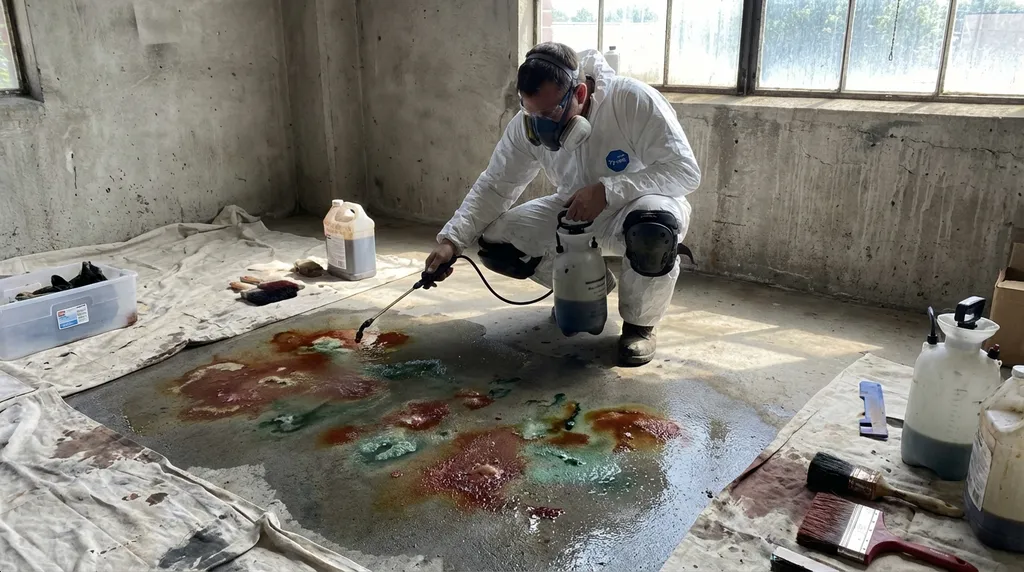
Surface prep takes a day. The acid application and reaction dwell time is 4–8 hours depending on the concrete and desired effect. Neutralization, washing, and drying add another day. Sealer is applied after the surface is fully dry — typically 48–72 hours after the stain. The full process runs 3–5 days weather-depending.
What colors are available with acid staining?
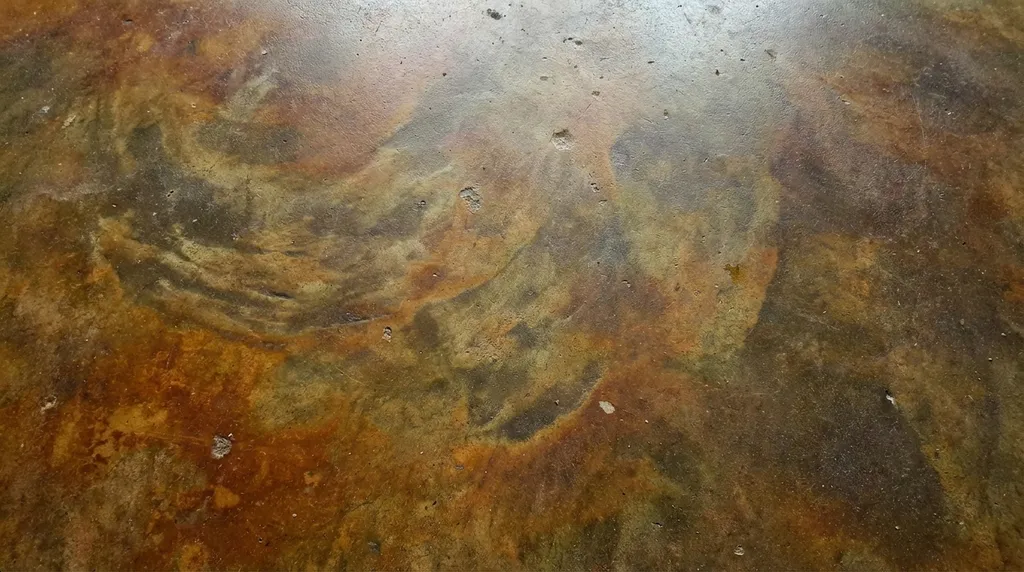
Acid staining produces earth tones: browns, tans, terra cottas, greens, and blue-greens. The palette is narrower than water-based stains or integral color because it depends on the chemical reaction with the concrete's existing mineral content. Every concrete slab stains slightly differently — which is what gives acid-stained concrete its unique, non-uniform character.
Add Color That Lasts
Through DC Seasons
Free color consultations and estimates for colored and stained concrete across Washington, DC and the DMV region.