
Garage Floors
Heavy-duty garage floors built to resist DC road salt, vehicle loads, and oil drips. Smooth trowel finish, optional epoxy coating, floor drain integration available.
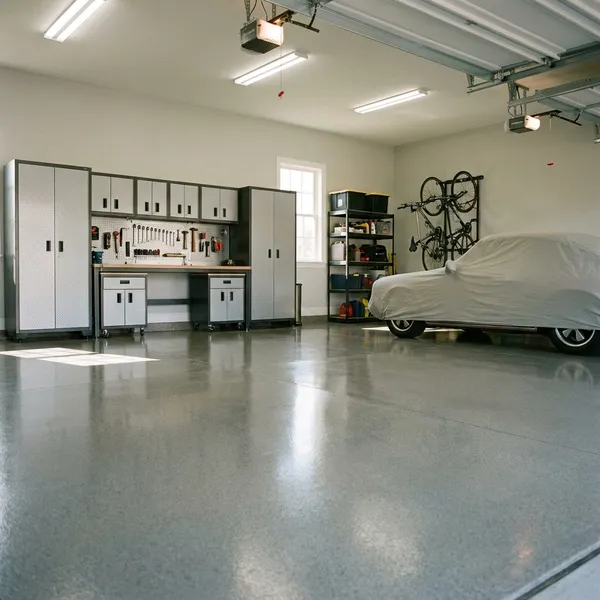
Garage Floors That Survive DC Winters and Road Salt
At DC Superior Concrete , we install and replace garage floors for residential properties throughout Washington, DC — new construction, full replacements, and garage additions across the DMV region.
The biggest threat to a DC garage floor isn't vehicle weight — it's road salt. DDOT spreads thousands of tons of deicing material on DC streets every winter. Every time a vehicle pulls into a garage, it carries chloride-laden slush that drips and puddles on the floor. In an improperly sealed or low-quality concrete floor, those chloride ions migrate into the slab, attack the reinforcement, and cause the scaling and spalling that ruins DC garage floors within 5–10 years.
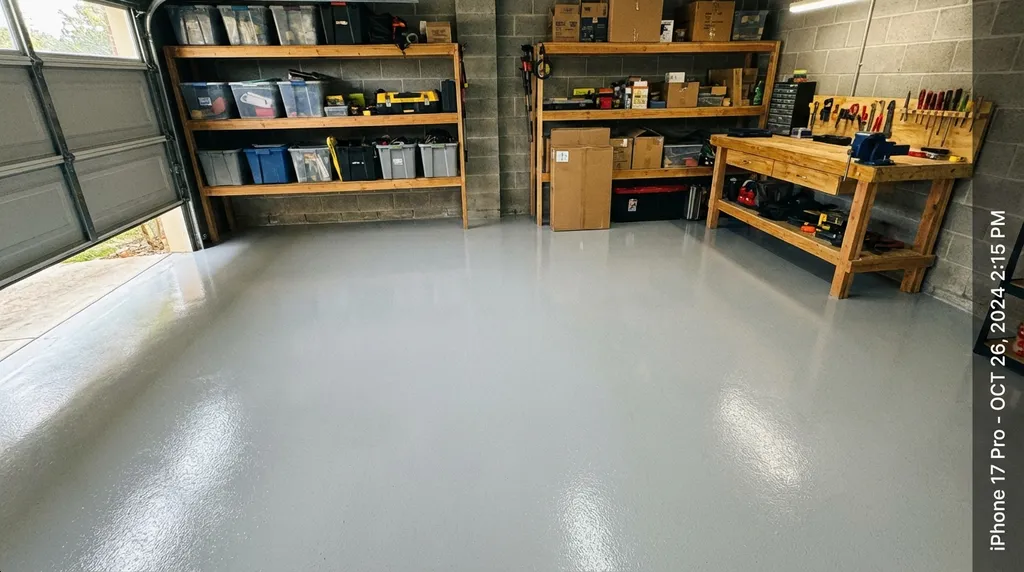
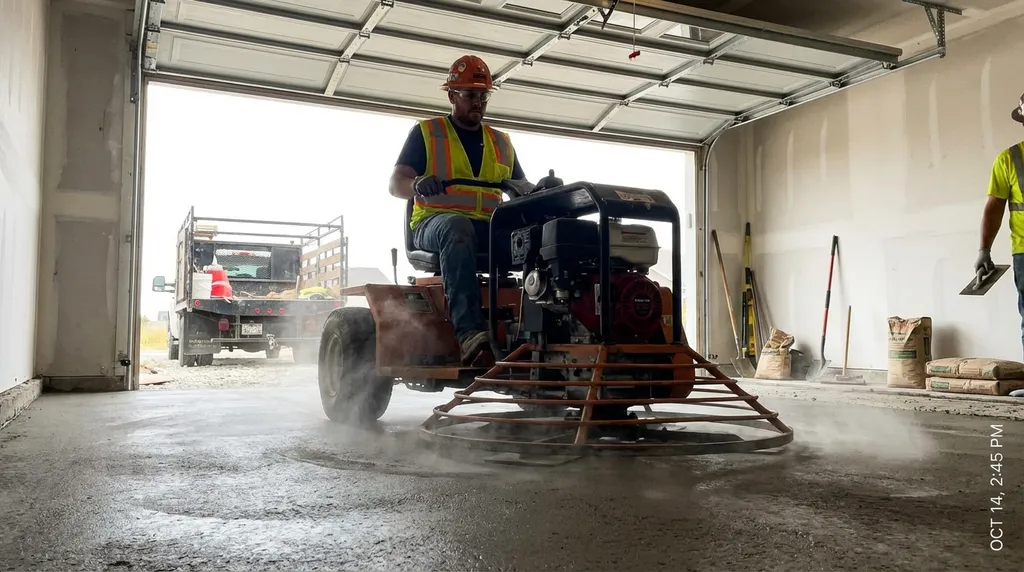
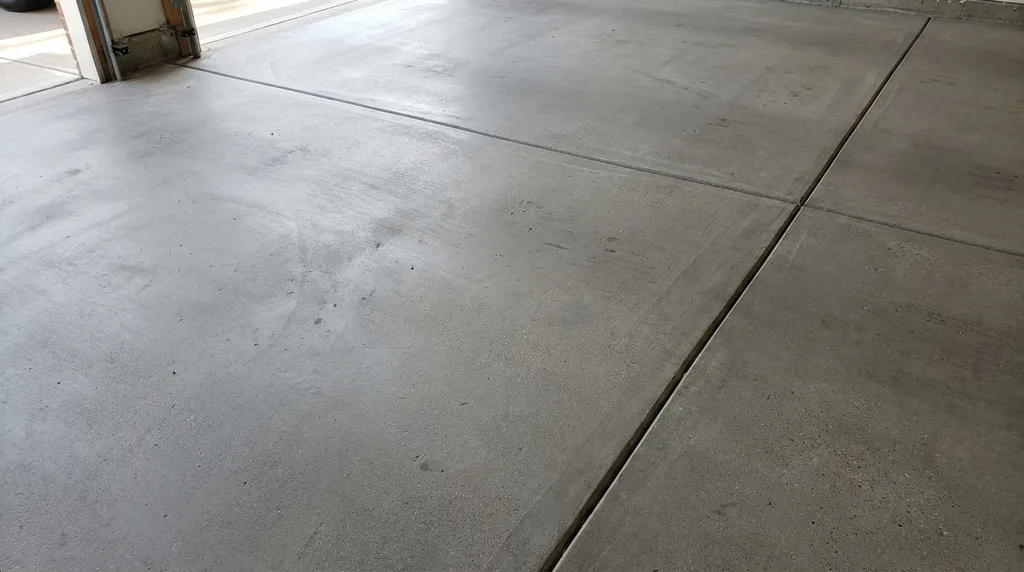
We pour garage floors with a 4,000 PSI air-entrained mix, steel trowel finish, and penetrating sealer to close surface pores against salt penetration. For customers who want the cleanest, most durable surface possible, we can apply a professional epoxy coating system after the concrete cures — creating a floor that's impermeable, easy to clean, and handles DC salt season without degrading.
Why DC Garage Floors Fail Without the Right Spec
Road Salt Tracked In
Every DC winter, cars carry deicing salt directly into your garage. The chloride content of that slush is aggressive — at concentrations that attack cement paste and, over time, corrode reinforcing steel. The result is spalling that starts at the surface and works deeper. Only a dense, air-entrained mix and proper sealing hold it off.
Moisture from Below
DC's clay subsoil is consistently damp. A garage floor without a vapor barrier sits on a wicking moisture source that causes efflorescence, pushes up through cracks, and keeps the garage perpetually humid. We install a 10-mil vapor barrier standard on all garage floors — not optional in the DC climate.
Floor Drain Planning
A garage floor drain collects winter melt water and cleaning runoff in one location rather than allowing it to pool and seep into the slab or foundation wall. We can integrate a floor drain into new garage floor pours — but it must be planned before the pour, not added as an afterthought.
What Every Garage Floor Installation Includes
Garage Floor FAQ
Can I apply epoxy coating over my existing garage floor?
Yes, when the existing slab is structurally sound with no active moisture migration from below. We profile the surface with shot blasting or diamond grinding, repair any cracks, and apply a multi-coat epoxy system. Existing floors with significant moisture wicking or delamination should be replaced rather than coated.
How long do I have to stay off a new garage floor after pouring?
Light foot traffic is safe after 24 hours. Vehicle traffic should wait 7 days minimum. DC weather matters — colder temperatures slow strength gain, so we extend the wait time in January pours. Full 4,000 PSI strength develops at 28 days.
My garage floor is scaling and pitting — can it be repaired?
Surface scaling from salt damage can be repaired with polymer-modified concrete patch and a penetrating sealer if the underlying slab is sound. If salt penetration has reached the rebar causing visible rust staining or the slab has delaminated in large sections, replacement is more cost-effective.
Should I add a floor drain to my DC garage?
It depends on your situation. In DC winters, floor drains are useful for managing melt water and spring cleaning. However, floor drains connect to the building plumbing system and need a trap maintained to block sewer gas. Discuss this with us during the estimate — it's a pre-pour decision.
What's the difference between epoxy and polyurea/polyaspartic coatings?
Epoxy provides excellent chemical resistance and adhesion for a lower cost. Polyurea and polyaspartic topcoats cure faster, offer better UV stability, and resist temperature extremes better — important for DC garages that see both summer heat and winter freeze. We use epoxy base coats with polyaspartic topcoats for the best combination.
Get a Garage Floor
That Handles DC Winters
Free estimates for garage floor installation and replacement in Washington, DC and the DMV area.